
Why AC and Ventilation Defects Are Dubai’s Most Costly Hidden Issues

A property can look spotless at handover and still hide a serious problem above the ceiling. The paint is fresh, the floors shine, the view sells the apartment, and the AC seems to blow cold air during a quick visit. Then summer arrives, humidity rises, filters clog, condensation forms, and the real cost begins.
In Dubai, AC and ventilation are not small comfort features. They are part of the building’s survival system. They control heat, moisture, indoor air quality, odors, energy use, and in many cases, whether finishes stay dry and usable. When defects sit unseen inside ducts, ceiling voids, fan coil units, drain lines, shafts, and insulation, they can become some of the most expensive hidden issues in a home or commercial unit.

Small AC flaws become large costs in Dubai
Dubai’s climate gives AC systems little room for error. Cooling runs for much of the year, and peak summer heat puts every part under pressure. Add humidity, dust, frequent construction nearby, and tightly sealed interiors, and a small defect can quickly affect the whole property.
A minor duct leak may not look dramatic during a short inspection. Over time, it can send cooled air into the ceiling void instead of the room. That forces the system to run longer, increases electricity use, and leaves certain rooms warmer than others.
A poorly sloped condensate drain can seem harmless until water starts backing up. The first sign might be a damp patch, a musty odor, or damage to gypsum board. By then, the repair may involve opening ceilings, drying the area, replacing damaged finishes, and correcting the drain line.
The problem is simple: AC defects often hide behind finished surfaces, while the costs appear in visible damage, poor comfort, high utility bills, and repeated maintenance calls.
Ventilation defects are harder to spot than a broken AC unit
When an AC unit fails completely, the problem is obvious. The room gets hot, the system shows an error, and a technician is called. Ventilation defects are more subtle.
Poor ventilation may show up as:
Lingering cooking smells
Stale air in bedrooms
Bathrooms that stay humid after use
Condensation on vents or ceilings
Dust returning soon after cleaning
Uneven cooling from room to room
Mold-like spotting around diffusers or inside wardrobes
These signs are easy to blame on lifestyle, cleaning, or “normal Dubai humidity.” Sometimes that is true. Often, the cause sits deeper in the system.
Ventilation depends on airflow balance. Supply air, return air, exhaust fans, duct sizing, door undercuts, and fresh air intake all have to work together. If one part is wrong, the system may still run, but it will not perform properly.
For example, a bedroom may receive cold air but have no effective return path. The door is closed at night, pressure builds, airflow drops, and the room feels stuffy. The thermostat may be satisfied in the hallway, while the bedroom remains uncomfortable.
That kind of defect does not always trigger an alarm. It creates a daily problem that slowly affects comfort, energy use, and indoor conditions.

The hidden locations make repairs more expensive
AC and ventilation systems are spread through spaces that are rarely easy to reach. A defect might be inside a ceiling void, behind a service panel, above a bathroom, in a balcony-mounted unit, or within a shared building shaft.
Access matters because labor and reinstatement often cost more than the faulty part itself. Replacing a small drain fitting is simple if it is visible. It becomes a larger job when workers need to cut a ceiling, protect furniture, remove wet insulation, trace the line, repair the slope, then repaint.
Hidden defects also create uncertainty. If the source is not obvious, owners may pay for several visits before the true cause is found. One technician cleans the filter. Another tops up refrigerant. Another seals a visible joint. The symptoms return because the root problem remains.
That is why these issues become costly. The direct repair is only one part of the bill. The full cost may include:
Hidden defect | What it can lead to |
Leaking duct joints | Lost cooling, longer running time, hot rooms, dust entry |
Poor drain slope | Ceiling stains, water leaks, damaged gypsum, odors |
Missing or damaged insulation | Condensation, dripping, energy waste |
Undersized ducts | Noisy airflow, weak cooling, uneven room temperatures |
Poor fresh air supply | Stale air, pressure imbalance, odor transfer |
Weak bathroom exhaust | Persistent moisture, smells, damaged finishes |
Dirty coils or filters | Reduced cooling, higher load on equipment |
Bad access design | Longer maintenance time and higher repair costs |
A visible defect can be priced. A hidden defect must first be found, exposed, confirmed, repaired, and closed up again.
Moisture is the real damage multiplier
Heat is uncomfortable, but moisture is often what turns an AC defect into a building defect.
Dubai’s humidity can be intense, especially near the coast and during certain months. AC systems do more than cool air. They also remove moisture. When the system is poorly designed, poorly installed, or poorly maintained, humidity may remain too high indoors.
That creates several risks.
Gypsum ceilings can stain or sag when exposed to repeated condensation. Paint may bubble. Metal parts can corrode. Doors and cabinets may swell. Wardrobes can develop musty smells if air does not circulate. In damp areas, mold-like growth can appear on surfaces. Some people may be sensitive to indoor mold or poor air quality, so persistent moisture should be treated seriously and assessed by qualified professionals where needed.
Moisture problems can also confuse diagnosis. A stain near a vent may look like a plumbing leak. A smell in a bedroom may seem like a housekeeping issue. Condensation inside a ceiling can be mistaken for roof or facade leakage.
The AC system may not be the only cause, but it often plays a role. That is why moisture tracing should include HVAC checks, not just plumbing checks.
New properties are not immune
Many people assume AC and ventilation defects happen only in older buildings. That is a risky assumption in Dubai.
New properties can have defects from installation, commissioning, or late-stage changes. A unit may pass basic cooling checks but still have poor airflow balance. Ducts may be damaged above the ceiling during other finishing work. Drain lines may be connected but not sloped correctly. Insulation can be incomplete around chilled water pipes or ducts.
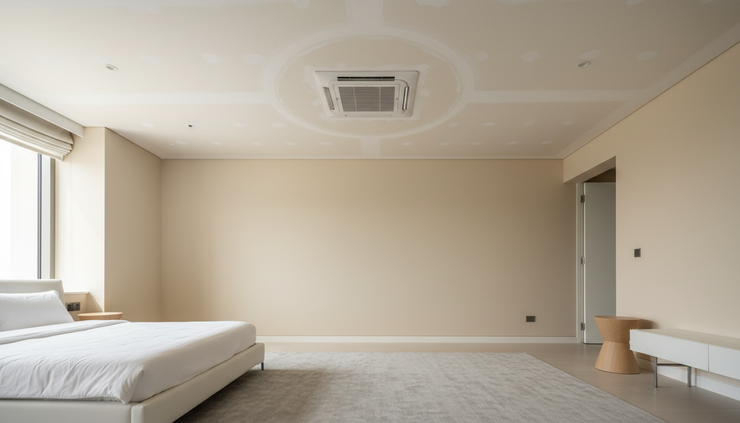
Luxury finishes can make this harder. High-end interiors may hide mechanical systems behind neat access panels, feature ceilings, built-in wardrobes, and decorative bulkheads. The better the property looks, the easier it becomes to overlook what is happening behind the finish.
Handover timing also matters. A quick viewing may happen when the unit has not been occupied long enough for problems to show. AC may be running for a short time only. Bathrooms may not have been used regularly. Wardrobes may be empty. Cooking, showering, sleeping with doors closed, and daily cooling loads all reveal issues that a brief walkthrough can miss.
A new home can still need a careful AC and ventilation inspection before final acceptance.

The energy bill often reveals the problem late
One costly part of AC defects is wasted electricity. If cooled air escapes into ceiling spaces, if ducts are too restrictive, or if the system struggles against clogged filters and dirty coils, the AC runs longer than it should.
The property may still feel cool enough, which makes the issue easy to ignore. The owner or occupant notices only that the bill feels high. By then, months of inefficient operation may have passed.
Energy waste can come from several hidden causes:
Unsealed duct connections
Poorly insulated ducts or chilled water lines
Thermostats placed in unsuitable spots
Return air paths blocked by doors or furniture
Incorrect fan speed settings
Dirty filters and coils
Oversized or undersized equipment
Fresh air dampers set incorrectly
Some of these problems are simple to fix. Others require design review or access to concealed areas. The key is not to assume high AC costs are normal just because Dubai is hot. Heat raises demand, but defects make demand worse.
Repeated maintenance does not always mean proper diagnosis
Many AC issues get treated as routine maintenance problems. Filters are replaced, coils are cleaned, and the system is restarted. Routine care is useful, but it cannot correct every defect.
If a room never cools evenly, cleaning alone may not solve it. If the same ceiling stain returns, the drain route may need correction. If odors move between rooms or from common areas, pressure and ventilation design may need review.
A good technician should look at symptoms as a system, not as isolated complaints. The question is not only whether cold air comes out of a vent. The better questions are:
Is the right amount of air reaching each room?
Does air have a proper return path?
Are exhaust fans removing air effectively?
Are ducts sealed and insulated?
Is condensation draining correctly?
Are access panels large enough for maintenance?
Are humidity levels reasonable for the space?
Is the system suited to the property layout?
When these questions are skipped, owners pay for short-term relief instead of long-term correction.
What a practical AC and ventilation inspection should include
A useful inspection does not need to be dramatic. It needs to be methodical. The goal is to connect visible symptoms with hidden causes before damage spreads.
A proper check should include:
Visual inspection of accessible equipment
This includes fan coil units, filters, drain pans, valves, insulation, access panels, and obvious leaks or stains.
Airflow checks in occupied rooms
Rooms should be assessed for weak supply, blocked returns, noisy grilles, pressure imbalance, and uneven cooling.
Condensate drain review
Drain lines should be checked for slope, blockage risk, visible leaks, and safe discharge points.
Duct and insulation condition
Accessible ducts should be checked for loose joints, crushed sections, missing insulation, damaged vapor barriers, and signs of condensation.
Humidity and odor clues
Persistent smells, damp wardrobes, wet patches, and condensation around vents should be treated as clues, not minor annoyances.
Controls and thermostat placement
A thermostat near sunlight, heat-producing appliances, or poor airflow can cause misleading readings and uneven comfort.
For property buyers, tenants, and owners, this kind of inspection can be especially useful before handover, before the end of a defect liability period, or before major renovation work covers access points.
Why ignoring the issue affects resale and rentability
AC performance is part of property value in Dubai. A beautiful unit that feels humid, smells stale, cools unevenly, or shows ceiling stains becomes harder to enjoy and harder to market.
Prospective tenants notice hot rooms quickly. Buyers notice water marks and ask for discounts. Property managers face repeat complaints. Owners may have to repair finishes before every lease cycle if the root cause remains.
There is also the disruption cost. Opening ceilings in an occupied apartment is messy. Furniture needs protection. Rooms may be unusable. Painting and drying take time. If parts must be ordered or if access is poor, the repair can stretch longer than expected.
This is why prevention matters. A defect found early, while panels are open or before final payment, is usually easier to handle than one found after water has damaged finished interiors.
The best time to find defects is before they look serious
The most expensive AC and ventilation defects rarely begin as obvious failures. They start as weak airflow, a damp smell, a noisy grille, a small stain, or a room that never feels quite right. In Dubai, those early signs deserve attention because the climate keeps testing the system every day.
The smart approach is simple. Treat AC and ventilation as core building systems, not background utilities. Look beyond whether the air feels cold for a few minutes. Check how the system performs across rooms, over time, and under real use.
A cool apartment is not always a healthy or efficient one. The real question is whether the AC and ventilation system can control heat, humidity, airflow, and moisture without wasting energy or damaging the property. Finding that answer early can save far more than it costs.
Quality finishes don't happen by accident - they happen with expert Property inspection. Trust Maestro Snaggers to catch every flaw before you take the keys.


Comments