Dubai Property Snagging Checklist for New Homebuyers

A brand-new home can still have cracked tiles, weak water pressure, blocked drains, scratched glass, loose sockets, and AC issues hiding in plain sight. In Dubai, where many buyers receive newly built apartments, villas, and townhouses from developers, snagging is the step that helps catch those defects before they become your responsibility.
Property snagging is a detailed inspection carried out before, during, or soon after handover. The goal is simple: find construction defects, incomplete work, poor finishing, safety concerns, and functional problems, then report them clearly to the developer for rectification.
This Dubai Property Snagging Checklist for New Homebuyers covers what to inspect room by room, what documents to keep, and which hidden issues need extra attention in Dubai homes.
This guide is for general information only. It is not legal, financial, or technical advice for a specific property.

Why snagging matters before you accept handover
Developers usually give buyers a handover window and a chance to inspect the property. This is the best time to identify visible and functional issues because the unit is still fresh from construction.
Once furniture arrives and people move in, defects become harder to prove. A scratched window, chipped tile, stained countertop, or damaged door frame can quickly turn into a dispute over whether it happened before or after occupancy.
Snagging also helps with less obvious faults, such as:
Poor AC cooling in one room
Water leakage under a vanity
Incorrect slope in a balcony drain
Hollow floor tiles
Doors that do not latch
Uneven paint finish in natural light
Loose sanitary fittings
Electrical sockets with poor alignment
Dubai homes also face specific conditions. Heat, humidity, dust, and heavy AC use can expose weak workmanship quickly. A sealant gap around a window may not look serious during viewing, but it can allow dust, moisture, and noise into the home later.
A good snagging report gives the developer a clear list of items to fix. It should include photos, locations, descriptions, and severity. Vague comments such as “bad finish in bedroom” are easy to ignore. Clear notes such as “Bedroom 2, left wall near balcony door, paint bubbling at lower corner” are much more useful.
What to prepare before the inspection
Do not arrive with only your phone and a quick walkthrough mindset. A proper snagging inspection needs patience, daylight, and a plan.
Bring these items if you are inspecting the property yourself:
A fully charged phone with a good camera
A flashlight
A measuring tape
A small level
Blue painter tape or removable defect stickers
A notepad or checklist app
A phone charger to test sockets
A small tissue or dry cloth to check leaks
A marble or small ball to check floor slope in wet areas
Copies of the floor plan, layout, and handover documents
Try to inspect during daylight. Natural light makes paint defects, scratches, poor plastering, and uneven finishes easier to spot. Still, switch on every light fixture and test the home in both natural and artificial lighting.
Ask for access to all areas, including balconies, storage rooms, parking spaces, service areas, roof terraces, utility rooms, and maid’s rooms if they are part of the property.
Take wide photos of each room first, then take close-ups of defects. This makes it easier to prove the exact location later.
A snagging inspection is not about finding fault for the sake of it. It is about making sure the property you paid for is complete, safe, and finished to the expected standard.
Start with walls, ceilings, floors, and finishes
Finishing defects are some of the easiest to see, but they are also easy to miss if you move too fast. Walk through each room slowly and inspect from different angles.
Check walls and ceilings
Look for cracks, dents, stains, uneven plaster, paint drips, bubbling paint, patchy touch-ups, and poor corner lines. Pay close attention around windows, AC vents, doors, and ceiling corners.
Common wall and ceiling snags include:
Uneven paint shade between walls
Visible roller marks or brush marks
Hairline cracks near corners
Water stains near bathrooms or AC areas
Poor finishing around access panels
Gaps near skirting or ceiling edges
Small cosmetic issues may not feel urgent, but they can affect the overall finish of a new home. Water stains and bubbling paint need more attention because they may point to leaks or moisture.
Inspect floors carefully
Flooring problems can be expensive and disruptive after move-in. Check tiles, stone, wood flooring, laminate, and skirting.
Look for chips, cracks, stains, lippage between tiles, uneven grout, loose skirting, and hollow sounds. Tap tiles gently with your knuckle or a small object. A hollow sound can mean poor bonding beneath the tile.
In wet areas, check that the floor slopes toward the drain. If water flows away from the drain or pools in corners, the floor may need correction.
Area | What to check | Warning sign |
Living room | Tile alignment, grout, skirting | Hollow tiles or uneven levels |
Bedrooms | Floor finish, door clearance | Scratches or lifted edges |
Bathrooms | Slope, waterproofing signs, drains | Standing water or bad smell |
Balcony | Drainage, surface slope, cracks | Water pooling near the door |
Kitchen | Floor stains, tile damage, sealant | Gaps near cabinets or walls |

Inspect doors, windows, glass, and balconies
Open and close every door and window. Do not just glance at them. Many snagging issues only appear when you use the item.
Doors and locks
Each door should open smoothly, close without force, and latch properly. Check the main entrance door, internal doors, wardrobe doors, balcony doors, bathroom doors, and kitchen doors.
Watch for:
Misaligned frames
Loose handles
Scratched door surfaces
Doors rubbing against the floor
Gaps around frames
Locks that stick
Poor sealant around frames
Main doors matter for security, privacy, and fire safety. If the door does not close correctly, report it as a priority item.
Windows and glass
Dubai homes often rely heavily on sealed windows to keep heat, dust, and noise outside. Check every glass panel for scratches, chips, cracks, and poor sealing.
Look at glass from different angles. Scratches often become visible only when sunlight hits the surface.
Check window and balcony door seals by looking for gaps, loose rubber, uneven silicone, or daylight around the frame. Poor sealing can lead to dust ingress, AC inefficiency, and water entry during rain or cleaning.
Balconies and terraces
Balconies need special attention because they are exposed to heat, dust, cleaning water, and occasional rain.
Inspect:
Floor slope toward the drain
Rust stains on metal parts
Loose railings
Cracked tiles
Poor waterproofing signs
Damaged sliding door tracks
Sealant gaps around thresholds
Blocked or badly placed drains
A balcony that drains toward the living room is a serious snag. Water should never collect near the inside threshold.
Test electricity, lighting, AC, and smart systems
Electrical and mechanical systems are where many hidden snags appear. These are not always visible, so test everything.
Electrical points and lighting
Turn on every switch. Test every socket. Check that light switches match the correct fixtures and that sockets are firmly fixed to the wall.
Look for:
Loose faceplates
Crooked switches
Dead sockets
Flickering lights
Exposed wires
Poorly fitted distribution board covers
Breakers that trip during normal use
If the property includes kitchen appliances, test each one. That includes the oven, hob, hood, refrigerator space power supply, dishwasher connection, and washing machine point.
Air conditioning
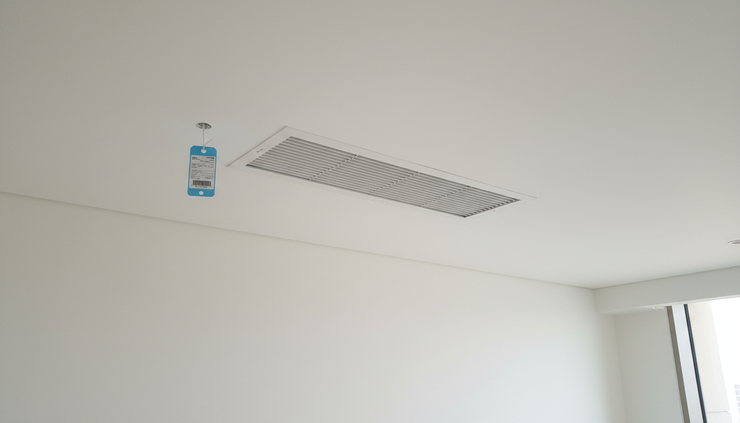
AC performance is one of the most important comfort issues in Dubai. Switch on the AC and let it run long enough to feel whether each room is cooling.
Check:
Airflow from each vent
Noise from indoor units
Thermostat control
Leaks around AC vents
Condensation stains
Access panel condition
Unpleasant smells from ducts or drains
If one room cools much slower than the others, note it. It may be a balancing issue, blocked duct, thermostat problem, or poor installation.
Smart home systems
Some new Dubai homes include smart locks, lighting controls, thermostats, video intercoms, or app-based access systems. Check that each feature works as promised.
Do not accept a vague “it will be activated later” without written confirmation. If a feature is listed in your property documents or handover package, it should be tested or recorded as pending.
Check plumbing, bathrooms, kitchen, and water pressure
Water issues can cause damage quickly, especially once the home is occupied. Test every tap, shower, flush, drain, and visible pipe connection.
Bathrooms
Run all taps and showers. Let the water flow for a few minutes, then check below sinks, behind toilets, around shower screens, and near floor drains.
Inspect:
Water pressure
Hot and cold water direction
Drain speed
Leaks under vanities
Toilet flush strength
Loose toilet seats
Shower screen alignment
Silicone around bathtubs and trays
Grout and tile finish
Exhaust fan operation
Bad smells from drains can point to trap issues or poor drainage. Slow drainage may indicate blockage from construction debris.
Kitchen
The kitchen should be checked both as a wet area and as a fitted joinery area.
Look at:
Sink drainage
Tap movement and leaks
Cabinet door alignment
Drawer movement
Countertop scratches
Gaps between countertop and wall
Sealant around sink and backsplash
Appliance spaces and connections
Hood extraction if installed
Open every cabinet. Check inside corners for water damage, exposed screws, rough edges, poor hinges, and missing shelf pins.
Laundry and utility areas
These areas are often rushed during construction. Check washing machine points, drainage, ventilation, water heaters, and access panels.
If the property has a water heater, inspect the surrounding area for leaks, corrosion, or missing drainage provisions. Make sure access is practical for future maintenance.
Look beyond the apartment or villa interior
Snagging should not stop at the front door. Your property may include parking, storage, garden areas, roof terraces, external walls, gates, and shared access points.
For apartments, check:
Assigned parking bay markings
Storage room condition if included
Corridor walls near the unit
Unit number signage
Doorbell and intercom
Access card operation
For villas and townhouses, inspect:
External paint and render
Boundary walls
Gates and locks
Driveway finish
Garden grading
Roof access if available
Outdoor taps
External lights
Drain covers
AC outdoor unit placement
Shared building areas may fall under common property, but defects near your unit can still affect daily comfort. Record them and ask who is responsible for correction.
How to document snags the right way
The quality of your report matters. A long list of vague complaints is less useful than a clear, organized record.
For each snag, include:
Room or area
Exact location
Clear description
Photo from a distance
Close-up photo
Severity level
Suggested action if obvious
Use simple wording. For example:
“Master bathroom, vanity cabinet, lower left internal corner. Active water leak visible after running tap for two minutes.”
That is much stronger than:
“Bathroom cabinet problem.”
Group the report by room so the developer’s repair team can work through the property efficiently. Number each item. Keep a copy of every email, report, and response.
If the developer marks an item as complete, reinspect it. Repairs can create new defects, such as paint mismatch, tile chips, or sealant mess. A final recheck is just as important as the first inspection.

When to use a professional snagging inspector
Some buyers inspect the home themselves and catch many obvious defects. A professional inspector can add value when the property is large, high-value, technically complex, or close to handover deadline.
A trained snagging inspector usually checks more than surface finishes. They may use tools to assess moisture, thermal differences, socket function, level variations, hollow tiles, and AC performance. They also know how to describe defects in a way developers can act on.
Professional snagging is especially useful for:
First-time buyers
Off-plan handovers
Villas and townhouses
Luxury apartments with complex finishes
Homes with smart systems
Properties being rented out soon after handover
Buyers living outside Dubai
If you use an inspector, ask what the report includes. A useful snagging report should be clear, photo-based, room-by-room, and easy to share with the developer.
A practical snagging sequence for handover day
Use this flow to avoid missing major items:
Walk the full property once
Get a general feel for condition, access, lighting, and any obvious major defects.
Inspect room by room
Start at the entrance and move in one direction. Do not jump around.
Test all working systems
Switches, sockets, AC, taps, showers, drains, appliances, locks, and intercoms need actual testing.
Check exterior and assigned areas
Include balcony, parking, storage, garden, service areas, and utility spaces.
Photograph everything clearly
Take one wide photo and one close-up for each defect.
Submit the report in writing
Avoid relying only on verbal promises. Written records protect both sides.
Reinspect repaired items
Confirm the defect is fixed and no new damage was caused during repair.
Final takeaway for new Dubai homebuyers
A new property should feel exciting, but handover is not the time to rush. Slow down, test everything, and record defects while the property is still empty and freshly delivered.
The best snagging checklist is not just a list of defects. It is a clear handover record that helps you get the home finished properly before daily life begins.
Inspect every room, every system, every drain, every door, and every finish. If something looks wrong, feels loose, leaks, sticks, smells, rattles, or does not work as expected, record it. A careful snagging inspection today can save weeks of repairs, stress, and avoidable cost after move-in.


Comments